Kahana Management's Blog
Practical guidance for NYC owners of condos, co-ops, and 2–4 family homes. Explore updates on local regulations, landlord responsibilities, property management, and rental operations.

Hiring Vendors in NYC Condos and Co-ops

Hiring Vendors for NYC 2–4 Family Homes

NYC Intro 1120-B and Co-op/Condo Application Delays
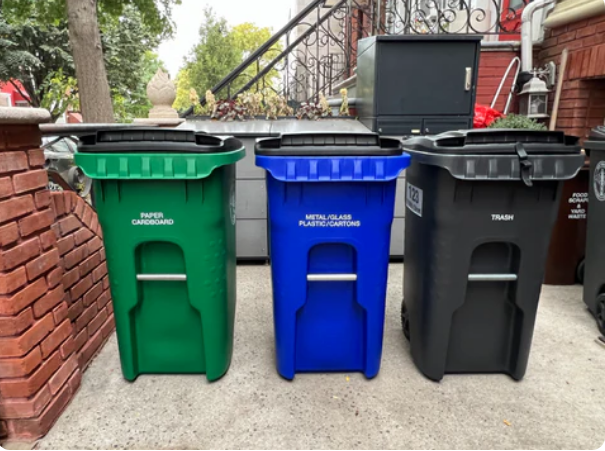
NYC Trash Bin Requirements for 2–4 Family Homes Key Takeaways: • Most NYC residential buildings with 1–9 units, including many 2–4 family homes, must use approved trash containers for garbage setout • Loose garbage bags placed directly on the curb are generally no longer permitted where containerization rules apply • The rules are part of NYC's effort to reduce rats, litter, odors, and sidewalk clutter • Property owners are responsible for providing and maintaining compliant containers • Trash containers must meet Department of Sanitation (DSNY) requirements for size, durability, and secure lids • NYC is transitioning toward standardized official NYC Bins for many smaller residential properties • Failure to comply may result in sanitation violations and fines • Recycling requirements remain separate and should continue to follow DSNY guidelines • Most small landlords can comply with a simple one-time investment in approved bins Understanding NYC's New Trash Bin Rules Beyond the Headlines For decades, New Yorkers were accustomed to seeing piles of garbage bags lining sidewalks on collection days. The city is now moving toward a containerized waste system that requires trash to be stored and set out in approved bins rather than loose bags. The goal is straightforward: reduce rodent activity, improve neighborhood cleanliness, minimize odors, and make waste collection more efficient. While much of the attention has focused on large apartment buildings, many owners of 2–4 family homes are also affected by the new requirements. As a result, confusion remains common among small landlords who are unsure whether the rules apply to their properties. Who Must Use Approved Trash Containers? The containerization rules apply to most residential buildings with 1–9 units throughout New York City. For owners of 2–4 family homes, this generally means garbage must be placed in approved containers with secure lids instead of being left on the curb in bags. Containers must meet DSNY specifications and be capable of fully containing waste while remaining securely closed. The city has also been moving toward the use of standardized official NYC Bins for many smaller residential properties. Property owners should verify current requirements for their building type and collection schedule through DSNY. Deadlines and Enforcement NYC has phased in its containerization requirements over time, with enforcement becoming increasingly strict. Property owners who fail to use compliant containers may be subject to sanitation violations and monetary penalties. Enforcement efforts are expected to continue expanding as the city transitions toward broader use of standardized containers. Because deadlines and implementation schedules may be updated, owners should review the latest DSNY guidance regarding approved bins, collection procedures, and enforcement timelines applicable to their property. What This Means for Small Property Owners For most 2–4 family landlords, compliance is relatively simple. The primary requirement is obtaining approved trash containers and ensuring garbage is stored properly between collection days and set out according to DSNY rules. Although purchasing bins creates an upfront expense, many owners may benefit from cleaner sidewalks, fewer pest problems, and reduced complaints from tenants and neighbors. The new requirements are generally much easier and less expensive to comply with than many other NYC property regulations. Bottom Line for Small Property Owners NYC's new trash container requirements represent a significant change for owners of 2–4 family homes and other small residential buildings. If your property falls under the rules, garbage should be placed in approved containers rather than loose bags. Staying compliant can help avoid fines, reduce pest issues, and keep your property aligned with the city's evolving sanitation standards.
Learn NYC HPD registration requirements for 2–4 family property owners, including compliance steps, deadlines, and penalties for non-registration.
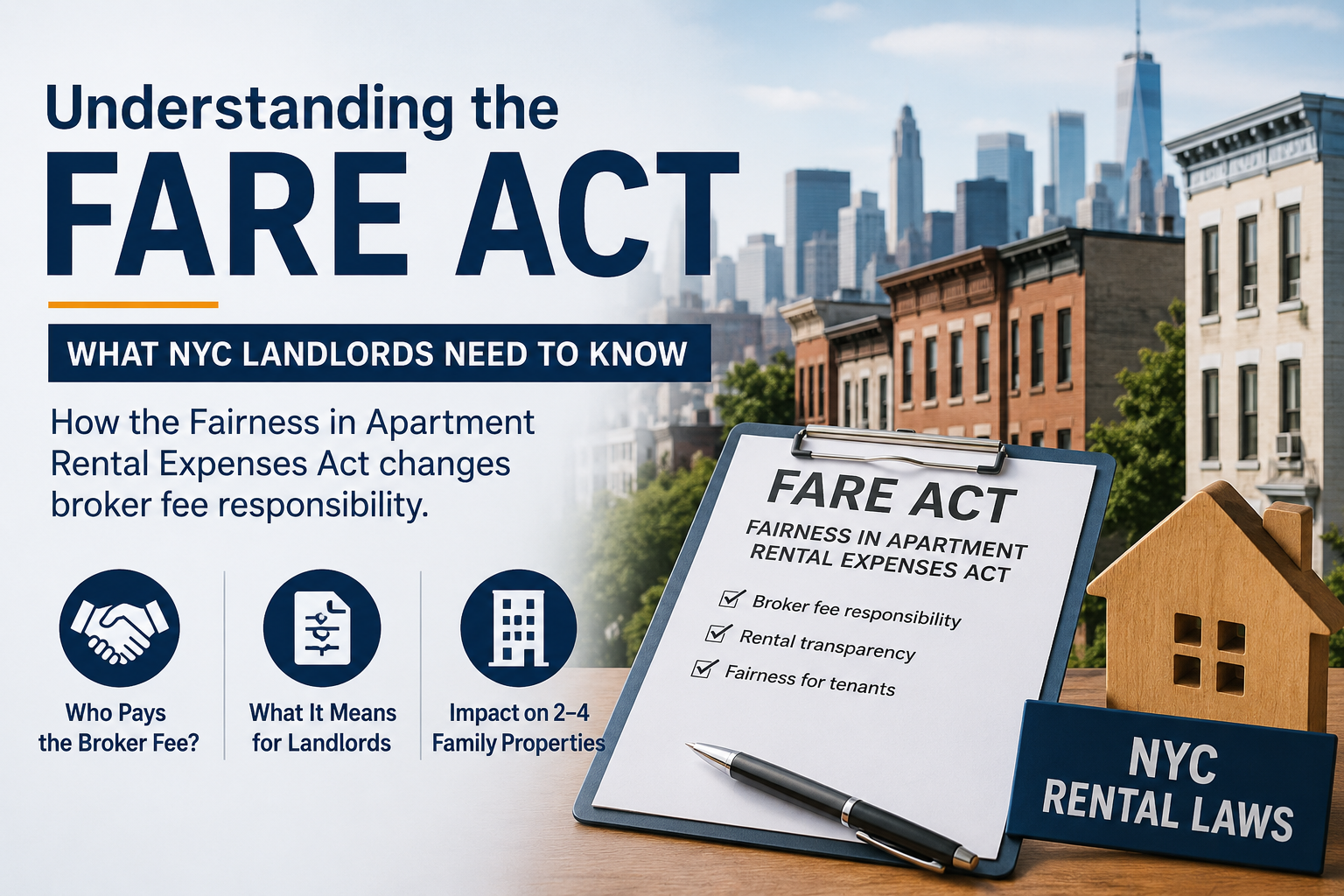
Key Takeaways: NYC FARE Act (Fairness in Apartment Rental Expenses) • The FARE Act requires the party who hires the broker to pay the broker fee in NYC rentals • Landlords who use brokers for leasing are now typically responsible for paying commissions • Tenants generally should not be charged broker fees when they did not hire the broker • The law changes cost allocation, not whether brokers are used in rentals • Small landlords may see higher upfront leasing costs when listing through agents • Private rentals without brokers are usually unaffected • “No-fee” listings increase for tenants, but fees still exist on the landlord side • Misunderstanding is common because broker fees are not eliminated, just reassigned Understanding the FARE Act Beyond the Headlines The FARE Act in NYC addresses how broker fees are assigned in residential rentals. Historically, tenants often paid broker fees even when the broker was working for the landlord. That mismatch is what the law is trying to correct. Instead of removing broker fees, the law ties payment responsibility to who actually hires the broker. In most standard rental listings, that means the landlord. What This Means for Small Property Owners For small landlords, especially owners of 2–4 family buildings, the practical change is financial timing. If you list a unit through a broker, you should expect to cover the broker’s commission rather than passing it to the tenant at lease signing. If you handle leasing yourself, or rent without a broker, the law doesn’t really change your process. Bottom Line for Small Property Owners The FARE Act does not remove broker fees from NYC rentals. It shifts them. Small landlords using brokers will see higher upfront leasing costs, while tenants are generally no longer charged fees for brokers they did not hire.
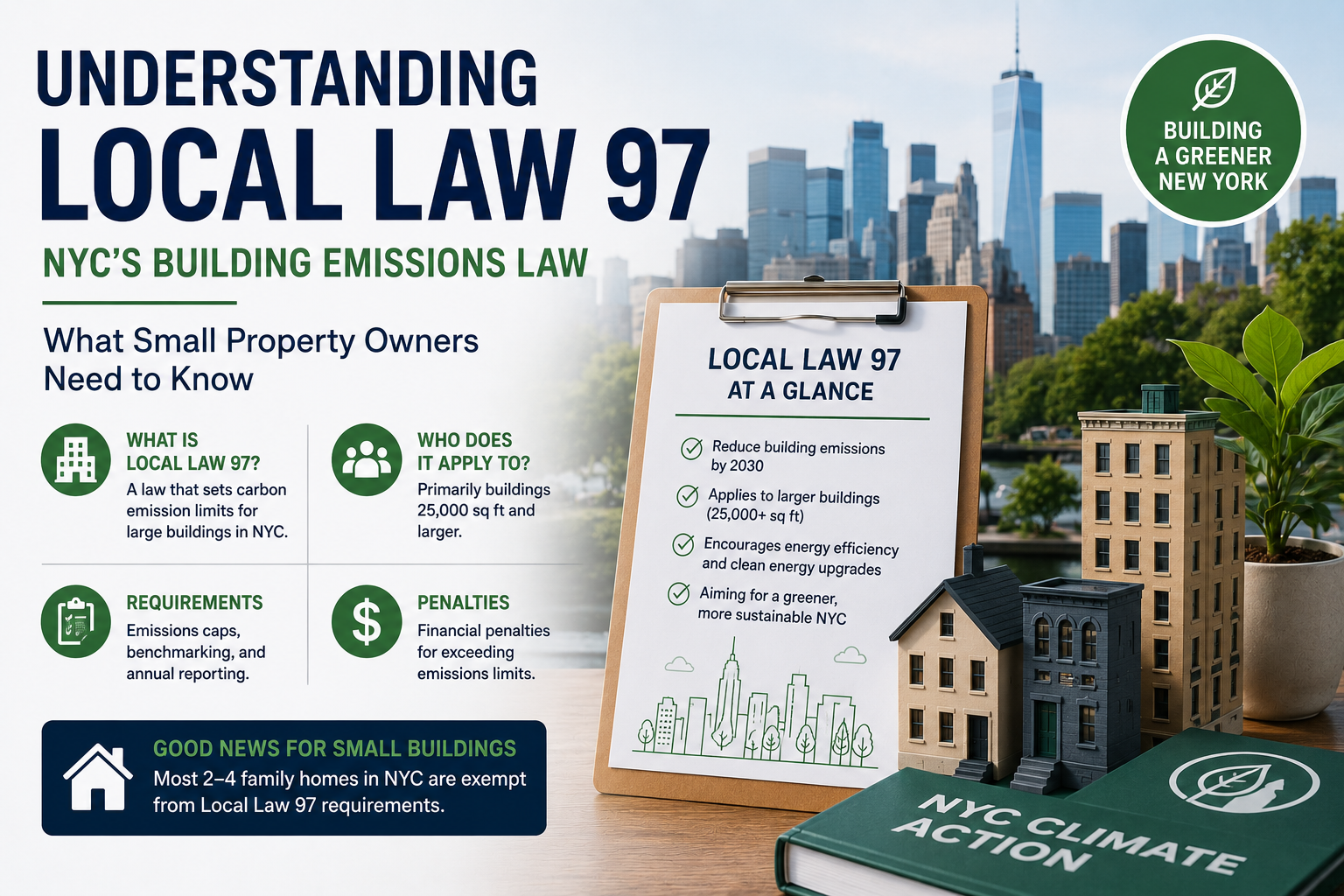
Key Takeaways: Local Law 97 & Small Residential Buildings (Article 321) • Most 2–4 family properties in NYC are NOT subject to Local Law 97 • Buildings under 25,000 square feet are exempt from emissions caps, penalties, and reporting • Article 321 explicitly excludes small residential buildings from compliance requirements • No carbon limits, benchmarking, or annual filings apply to these properties • Owners of 2–4 family homes do not need to retrofit to meet Local Law 97 • “Prescriptive Energy Conservation Measures” are not mandatory for exempt buildings • Measures like pipe insulation or heat timers are optional, not legally required • The law primarily targets large apartment buildings and commercial properties • Small landlords face no fines now or in future compliance periods • Energy upgrades may still reduce operating costs, but are voluntary • Local Law 97 is often misunderstood because most coverage focuses on skyscrapers • For typical 2–4 family owners, Local Law 97 is a non-issue from a legal standpoint ________________________________________ Understanding Local Law 97 Beyond the Headlines Local Law 97 was enacted to reduce carbon emissions from New York City’s largest buildings, which account for the majority of energy use citywide. As a result, most media coverage focuses on high-rise apartments and commercial towers—leaving small property owners confused about whether the law applies to them. For owners of 2–4 family homes, the answer is usually simple: it doesn’t. Under Article 321, residential buildings under 25,000 square feet are exempt from Local Law 97’s emissions limits, reporting obligations, and financial penalties. This exemption covers the vast majority of 2–4 family properties in NYC. ________________________________________ What Are “Prescriptive Energy Conservation Measures”? Prescriptive Energy Conservation Measures are a compliance option for covered buildings, allowing them to meet the law through basic energy upgrades instead of calculating emissions. Common examples include: • Insulating exposed hot water or steam pipes • Installing boiler heat timers or outdoor temperature controls • Using LED lighting and occupancy sensors in common areas • Implementing temperature setbacks during low-use hours These measures are often mentioned in Local Law 97 discussions—but they are not requirements for exempt buildings. ________________________________________ Do 2–4 Family Owners Need to Install These Measures? No. If your building is under 25,000 square feet, these upgrades are not required, not inspected, and not reported to the city. Some owners still choose to install them to reduce fuel costs or improve comfort, but that decision is purely optional. ________________________________________ Bottom Line for Small Property Owners Local Law 97 was not designed with small residential landlords in mind. For most 2–4 family properties, it creates no legal obligations, no penalties, and no compliance burden. Understanding this distinction can save owners unnecessary stress—and unnecessary spending.

Creating and maintaining a proper budget is critical for success when managing a property. Having a well-thought-out budget provides you...
Being proactive and having the right maintenance plan in place can significantly reduce long term expenses.
Owning and managing rental properties can be a lucrative venture but can also come with its own set of challenges. It can be commonplace...