By Adrian Caramihai
•
February 6, 2026
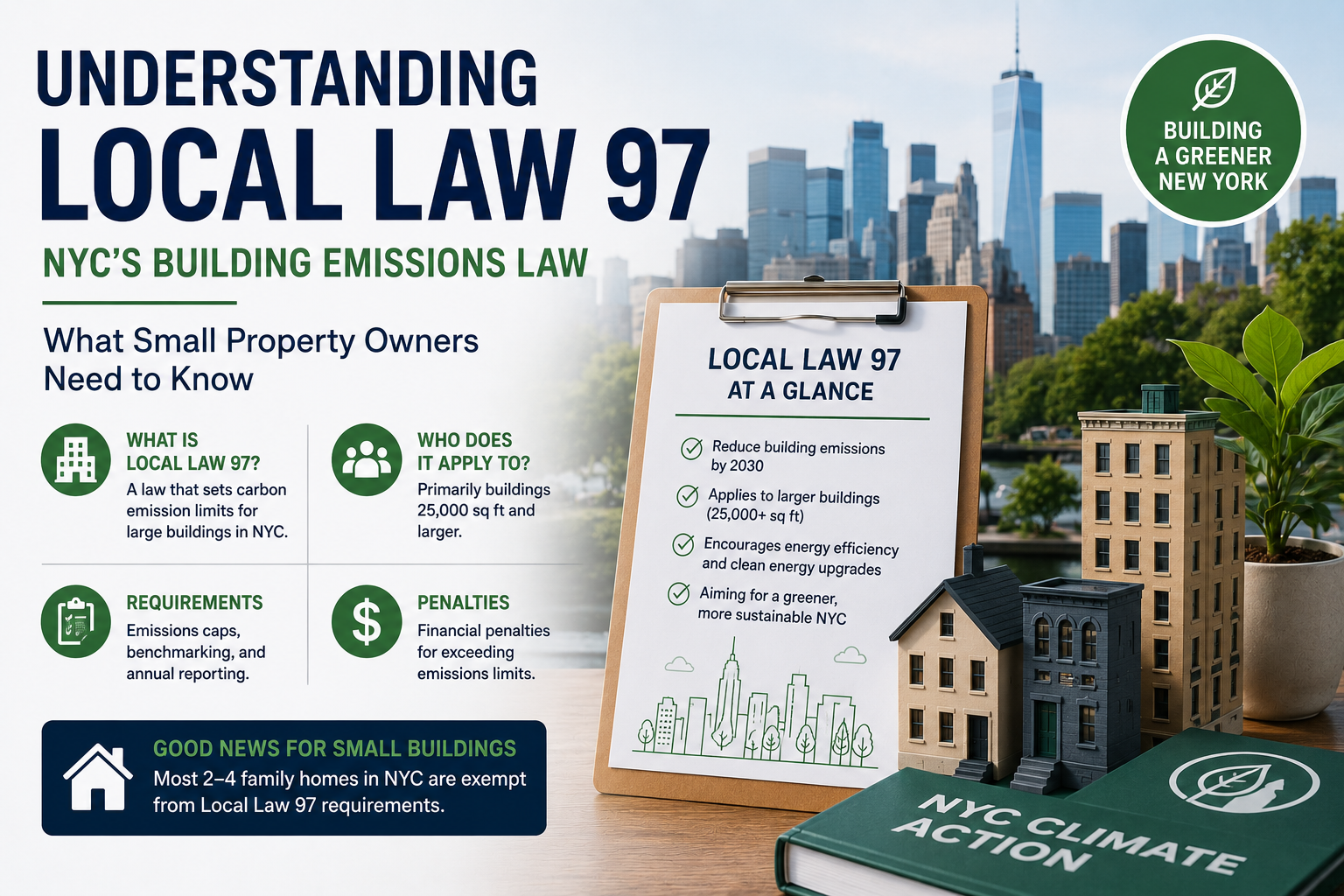
Key Takeaways: Local Law 97 & Small Residential Buildings (Article 321) • Most 2–4 family properties in NYC are NOT subject to Local Law 97 • Buildings under 25,000 square feet are exempt from emissions caps, penalties, and reporting • Article 321 explicitly excludes small residential buildings from compliance requirements • No carbon limits, benchmarking, or annual filings apply to these properties • Owners of 2–4 family homes do not need to retrofit to meet Local Law 97 • “Prescriptive Energy Conservation Measures” are not mandatory for exempt buildings • Measures like pipe insulation or heat timers are optional, not legally required • The law primarily targets large apartment buildings and commercial properties • Small landlords face no fines now or in future compliance periods • Energy upgrades may still reduce operating costs, but are voluntary • Local Law 97 is often misunderstood because most coverage focuses on skyscrapers • For typical 2–4 family owners, Local Law 97 is a non-issue from a legal standpoint ________________________________________ Understanding Local Law 97 Beyond the Headlines Local Law 97 was enacted to reduce carbon emissions from New York City’s largest buildings, which account for the majority of energy use citywide. As a result, most media coverage focuses on high-rise apartments and commercial towers—leaving small property owners confused about whether the law applies to them. For owners of 2–4 family homes, the answer is usually simple: it doesn’t. Under Article 321, residential buildings under 25,000 square feet are exempt from Local Law 97’s emissions limits, reporting obligations, and financial penalties. This exemption covers the vast majority of 2–4 family properties in NYC. ________________________________________ What Are “Prescriptive Energy Conservation Measures”? Prescriptive Energy Conservation Measures are a compliance option for covered buildings, allowing them to meet the law through basic energy upgrades instead of calculating emissions. Common examples include: • Insulating exposed hot water or steam pipes • Installing boiler heat timers or outdoor temperature controls • Using LED lighting and occupancy sensors in common areas • Implementing temperature setbacks during low-use hours These measures are often mentioned in Local Law 97 discussions—but they are not requirements for exempt buildings. ________________________________________ Do 2–4 Family Owners Need to Install These Measures? No. If your building is under 25,000 square feet, these upgrades are not required, not inspected, and not reported to the city. Some owners still choose to install them to reduce fuel costs or improve comfort, but that decision is purely optional. ________________________________________ Bottom Line for Small Property Owners Local Law 97 was not designed with small residential landlords in mind. For most 2–4 family properties, it creates no legal obligations, no penalties, and no compliance burden. Understanding this distinction can save owners unnecessary stress—and unnecessary spending.